AASCENT / GROWTH OPPORTUNITY

Pre-interview growth portfolio · August 2026

How Ascent can win the next generation of pilots.

A research-led growth thesis built from pilot interviews, public user reviews and current product evidence: understand the incumbents, identify Ascent’s clearest opening, enter the communities pilots already trust, and let users feel the value before they pay.

01What pilots use today
02Where Ascent can win
03How to reach them
04Let them try the value
01Competitive landscape & evidence

What pilots use today—and why.

Before proposing growth, I wanted to understand how pilots actually choose an EFB. The strongest pattern is not a feature checklist. It is trust: what the instructor uses, what peers recommend, and what the pilot can rely on under workload.

What is an EFB?

An Electronic Flight Bag is the pilot’s digital workspace for charts, weather, NOTAMs, route planning, airport information, checklists, navigation support and flight records. The product is software; the purchase decision is shaped by training habits and operational trust.

Pilot interview Public user review Official product fact Proposal / to validate
U.S. pilot interview

ForeFlight is the default—but often taught, not discovered alone.

“In my flying circle, almost everyone uses ForeFlight. It is not especially beginner-friendly because it has so many functions, so new pilots often learn it with help from their instructor.”
  • ForeFlight benefits from a strong local norm.
  • CFIs reduce the learning curve and shape software habits.
  • Feature depth is valuable, but can overwhelm a new student.
China-based pilot interview

One pilot can use both products for different jobs.

“Garmin felt easier to start with, while ForeFlight is more complete and seen as more professional. After two and a half years I still have not learned every ForeFlight function. My instructor uses ForeFlight. I keep my checklist in Garmin, but use ForeFlight for emergency checklists and flight planning.”
  • Garmin can win on initial familiarity; ForeFlight wins on perceived depth.
  • Flight planning is a higher-value job than a standalone checklist.
  • Instructor behavior can pull a student into a second subscription.

What public users repeatedly say

App Store ratings provide scale; forums provide context. Forum comments are qualitative evidence, not a statistically representative market survey.

ForeFlight review themes

Mature workflow, high depth, real learning cost.

Users value

  • Strong planning and graphical briefing
  • Broad VFR, IFR and performance depth
  • Familiarity across U.S. GA and training
  • Rich airport, weather and pilot information

Users question

  • High information density for beginners
  • Rising price and tier complexity
  • Recent reports of performance friction
  • Instructor workflows still have gaps
Open App Store reviews ↗
Garmin Pilot review themes

Powerful inside Garmin’s ecosystem; mixed outside it.

Users value

  • Garmin panel and Connext integration
  • SmartCharts and engine data
  • iOS and Android availability
  • Competitive pricing and CFI discount

Users question

  • More taps for some common tasks
  • Briefing often trails ForeFlight
  • Sync, logbook and connection reports
  • Less value without Garmin hardware
Open App Store reviews ↗

ForeFlight vs Garmin Pilot vs Ascent

Product status and prices checked against official pages in August 2026. “Accuracy” is intentionally not scored without controlled testing.

DimensionForeFlightGarmin PilotAscent EFB
Interface complexityDense and deep. Common workflows can be efficient after learning, but students may need instructor guidance.Familiar to Garmin avionics users; users coming from ForeFlight sometimes report deeper menu paths.Modern, native iOS presentation with route, weather, charts and terrain in one workspace. Independent usability evidence is still limited.
Professional depthThe broadest mature stack for personal, IFR, performance and business workflows.Mature EFB with especially strong avionics integration and SmartCharts.Covers core preflight-to-logbook jobs, but launched in July 2026 and does not yet have two decades of accumulated depth.
Price$130 Starter, $260 Essential, $390 Premium per year.About $109.99 Standard; higher situational-awareness capabilities sit in Premium.$59.99 first year, then $89.99 per year. One plan, no tier decision.
Information breadthVery broad: charts, briefing, airport/FBO data, advanced performance, IFR and enterprise capabilities.Strong planning, charts, weather, SmartCharts, logbook, checklist and hardware-connected data.Core planning, weather, NOTAMs, charts, 3D terrain, traffic and logbook; geo-referenced approach plates are not yet available.
Information accuracyMature data and support system, but pilots must still verify operational information.Mature Garmin data ecosystem, with the same pilot-in-command verification requirement.Claims the AirOS professional dispatch data pipeline. Reliability and coverage need independent same-route testing.
AI capabilityAI Connector research preview lets external assistants such as ChatGPT access authorized ForeFlight data and tools.No comparable public conversational assistant identified; SmartCharts is data-driven charting, not an LLM copilot.Native Copilot is positioned for voice/text questions about weather, NOTAMs, fuel and diversions, but the current site marks it “soon.”
User convenienceExcellent briefing and planning, large learning ecosystem, 30-day trial; iOS only and tier choice adds friction.Best for Garmin-panel owners, supports Android and iOS; some workflows take more taps.One price, offline regions, plain-language weather, automatic flight detection and track replay; iOS only, no panel integration, and currently no traditional free trial.
Accuracy cannot be ranked from marketing pages.

Run the same ten routes in all three apps. Compare weather, NOTAMs, airports, chart currency, update timing and what remains in airplane mode. The honest result may become one of Ascent’s strongest proof assets—or reveal what must improve before a claim is made.

02Product positioning & audience

Win where habits are still being formed.

Ascent should not claim to be a deeper ForeFlight or a better Garmin ecosystem. Its clearest opening is the pilot who needs the essential flight picture without inherited interface complexity or subscription ambiguity.

Proposed position A confidence-first EFB for student pilots and new private pilots—combining the essential flight workflow in one clear interface and one subscription.
Product advantage
User value
Most appealing to
Clear, modern interface

Lower cognitive load during the first cross-country and less time learning where functions live.

Students · new PPLs

One plan

No anxiety about buying the wrong tier or discovering a safety-relevant feature is above the entry plan.

Price-sensitive pilots

One flight workspace

Route, weather, NOTAMs, charts and terrain form one coherent picture.

First cross-country students

Fully offline regions

The plan, charts and terrain remain available on weak-coverage ramps and in flight.

Training airports · renters

Automatic flight log

Less post-lesson admin and fewer missing entries after a long training day.

Students · low-time pilots

Copilot, when released

Natural-language access may reduce search time, provided every answer is grounded and easy to verify.

AI-comfortable pilots

PRIMARY USER

Student pilots

High uncertainty, low switching cost, frequent instructor contact and strong need for a clear first cross-country workflow.

SECONDARY USER

New private pilots

Starting to plan independently, willing to pay beyond free tools, but not yet locked into years of EFB habits.

TRUST INFLUENCER

CFIs

They care whether an app is reliable, teachable and reduces lesson time spent explaining software.

DISTRIBUTION PARTNER

Flight schools

They care about consistent onboarding, account distribution, teaching standards and visibility into adoption.

Not the first wedge: Android users, pilots dependent on Garmin panel integration, active IFR pilots who require geo-referenced approach plates today, enterprise flight departments, and long-time ForeFlight experts with no meaningful pain.
03Growth channels

Enter the trust network pilots already use.

The two pilot interviews point to the same underlying behavior through different channels: aviation software spreads through trusted people. In China that exchange is heavily offline. In the U.S. it combines Reddit with CFIs, school peers and flying-club relationships.

China interview insight

Experience exchange happens offline.

Instructors, school peers, licensed friends and local flying circles are the trusted source. The acquisition strategy should enter those relationships, not depend on broad consumer reach.

U.S. interview insight

Reddit validates; CFIs and school friends convert.

Public community discussion helps a pilot compare products. The final confidence often comes from someone who teaches or flies with them.

My growth thesis Trust is transferred offline. Evidence is verified online. Habit is earned in flight.

An EFB is not adopted like an ordinary consumer app. A pilot is choosing which information tool to bring into a safety-critical cockpit, so perceived risk, established habits and professional endorsement matter more than broad reach alone. The job of growth is to move trust through the entire decision journey—not simply generate impressions.

01Trusted introduction

A CFI, flight school, flying-club member or experienced peer makes the product worth considering.

02Visible proof

Real workflows, honest comparisons, community discussion and offline demonstrations make the claim verifiable.

03Low-risk adoption

A first route, lesson or flight lets the pilot build confidence before Ascent becomes part of the routine.

Do not demand an immediate switch.

Invite pilots and CFIs to try Ascent alongside their current EFB on the next training flight. Parallel use lowers safety anxiety and switching resistance while giving Ascent a fair chance to prove a clearer workflow.

Social content is not the trust source by itself. It is the proof asset that a CFI, school, peer or community thread can pass along.

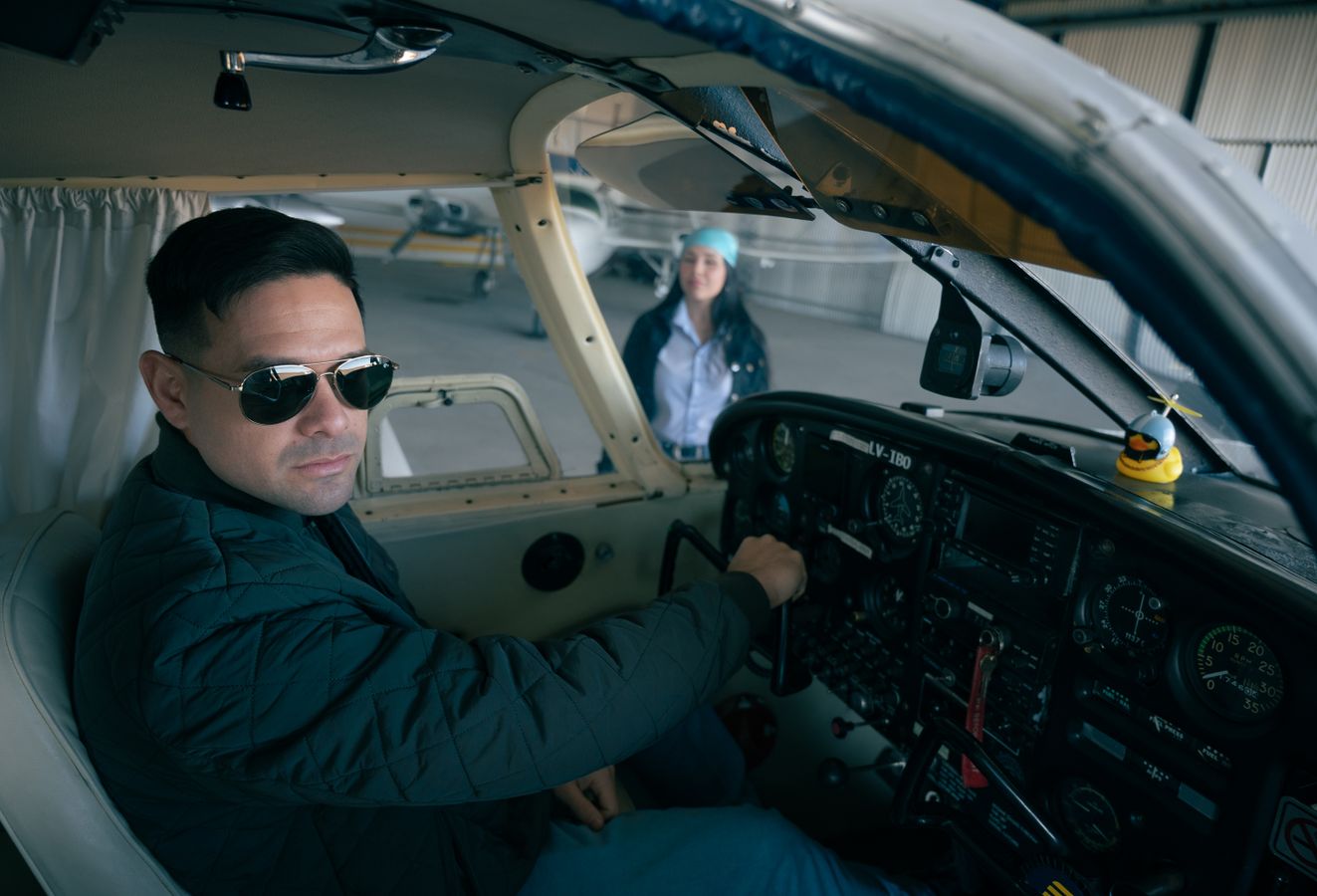
Pilot seated in a small-aircraft cockpit with another aviation professional nearby
1Trust sourceCFI or peer recommendation
Pexels · Patricia Bozan ↗
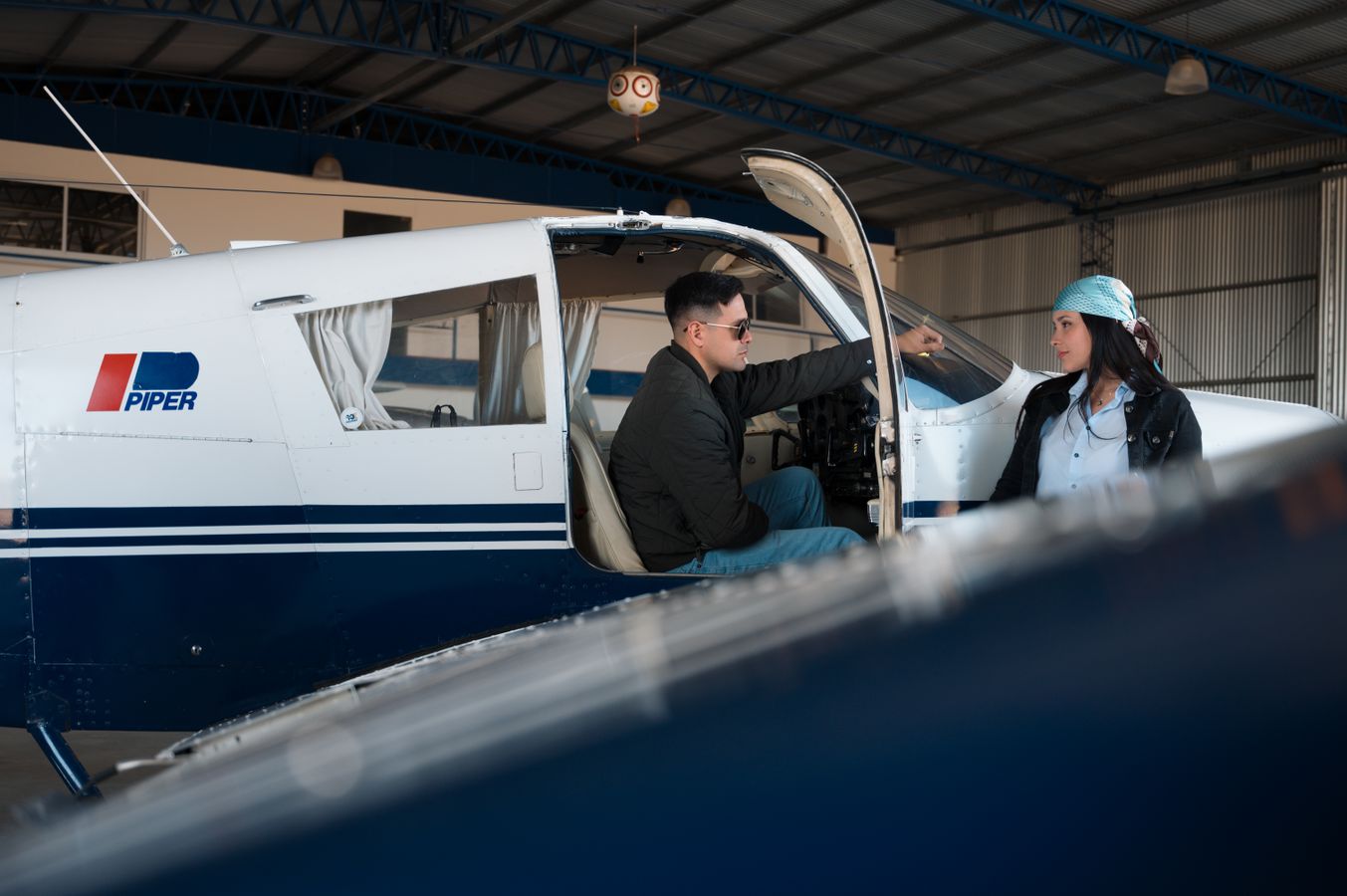
Two aviation peers discussing beside a small aircraft in a hangar
2Validation layerCommunity validation
Pexels · Patricia Bozan ↗
Pilot using a tablet electronic flight bag in an aircraft cockpit
3Decision triggerReal product proof
Photo · NBAA ↗
01

CFI program

Free or discounted instructor accounts, student access codes, a first-cross-country lesson kit, early feature access and a structured feedback circle.

Trust & recommendation
02

Flight-school pilots

Start with a cohort: school-branded codes, one onboarding workshop, instructor-supported route assignments and a simple adoption report. A school dashboard remains a future product opportunity, not a current claim.

Distribution at scale
03

Peer referral

Make the actual workflow shareable: routes, weather summaries and track replays. Add student-to-student and club codes so product use becomes the recommendation.

Social proof
04

Pilot communities

Founder-led participation, transparent comparisons, route tests, beta recruitment and thoughtful responses to criticism. Never disguise promotion as an ordinary pilot recommendation.

Discovery & validation
05

Short-form product proof

Show one real task in 15–45 seconds: build a route, read the weather picture, download an offline region or compare the same workflow across EFBs.

Fast comprehension
06

Educational search content

Capture active questions: “best EFB for student pilots,” “how to plan a first cross-country,” “ForeFlight alternatives” and “what works offline.”

Intent capture
Expanded beyond Reddit

Not one “social channel”—six different community jobs.

Each community has different norms. The right action ranges from answering questions to partnering with a club; the same promotional post should not be copied everywhere.

Open discussion

Reddit · r/flying

Best for candid comparisons, beginner questions and visible product criticism. Use transparent founder posts, same-route tests and calls for beta feedback.

Visit community ↗
Long-form pilot forum

Pilots of America

Strong fit for detailed training, IFR and equipment threads. Contribute technically useful answers and maintain an accountable product presence.

Visit forum ↗
Beginner community

Student Pilot Community

A beginner-focused Facebook community and resource site. Test first-cross-country education, guided demos and student access codes.

Visit community ↗
Club operator network

AOPA Flying Club Network

Reach club leaders and members through partnership, workshops and member trials—not generic consumer advertising.

Explore network ↗
Local hybrid community

EAA chapters & flying clubs

Local chapters combine real-world trust with newsletters and group communication. Offer a planning workshop or structured pilot test.

Find chapters ↗
Private peer groups

School WhatsApp, Discord & Slack

High-trust but inaccessible through ads. Enter only through a CFI, school, club or invited pilot champion, then provide a useful demo asset.

Community rule: lead with a real aviation problem, disclose affiliation, invite criticism, and use product links only when they answer the thread. Trust lost in a pilot community is expensive to rebuild.
04Trial & activation

Let pilots feel the value before they pay.

A lower first-year price reduces cost, but it is not the same as a trial. The user still needs evidence that the workflow is clear, the data is trustworthy and the offline experience survives a real lesson.

The current friction

Ascent promotes $59.99 for the first year and school access codes, while its current student comparison says it does not offer a conventional free trial. ForeFlight and Garmin Pilot both train users to expect trial access. Ascent should test a lower-risk first experience rather than assume price alone closes the gap.

Before download

Interactive route demo

Let a visitor enter two airports and explore a guided weather, airspace and offline story without registration.

Inside the app

Sample first flight

Open directly to a student cross-country such as KPAO → KMRY and guide the first five useful actions.

Risk reversal

Trial or first-flight access

Test 7–30 days, one free route, one free region or a first real flight. Measure quality, not just free downloads.

Trusted access

CFI and school code

Give the student a concrete lesson assignment and a code from someone they already trust.

Credibility

Evidence before claims

Show data sources, real screens, offline tests, current limitations and identifiable pilot feedback.

After first flight

Debrief as retention

Use automatic logging and track replay to create a second moment of value after the navigation task ends.

The first five-minute experience

01Choose or open a sample route
02Understand weather and airspace
03See terrain as one picture
04Download the offline region
05Know exactly what to do next
Trusted recommendationCommunity validationDemoFirst routeOffline packFirst flightDebriefPaid habit

WHY I CAN EXECUTE

Research, product and creative in one loop.

AI product

Agent skill development, evaluation and assistant prototyping transfer to Copilot grounding, trust and technical storytelling.

Content growth

100,000+ short-video views demonstrate hooks, production and platform-native iteration.

User insight

Qualitative interviews and product research can become messaging, experiments, channel choices and product feedback.

SOURCES & BOUNDARIES

Evidence first. Claims second.

Public information checked in August 2026. Interview quotes are qualitative observations and should be anonymized with permission. Proposed trials, school workflows and community programs are recommendations, not current Ascent capabilities.